Thursday, April 16, 2009
Dr. Goodheart in Hawaii - the Honolulu Tax Day Tea Party
I have been encouraged to resume blogging by a major league blogger who described my efforts as "good stuff". Since I greatly admire the particular blog, I was definitely flattered.


Thursday, September 06, 2007
Dr. Goodheart heads for Ukraine
For the first time since I left my regular cardiology position--shortly before Katrina hit in 2005--I'll be heading overseas. This time I'll be going to Kiev, Ukraine, to participate in a conference called "Children at Risk". Now as a cardiologist for adults, I do not take care of kids; nor am I a social worker nor an expert in the diseases of street kids. However, I do have quite a bit of experience in working in health care reform in the former Soviet Union, and some understanding of how totally and seriously communism messed up Soviet society for over 70 years. I also understand and can apply principles of evidence-based medicine to problems in health care other than cardiology.
Our first task will be to try to understand the current situation in Ukraine, compared with my last work in the former Soviet Union over five years ago. Our group--comprised of representatives from a number of charities and Christian church groups who have been involved in the problems of Ukrainian street children--will tour a juvenile detention center, an institutional home, and other pertinent sites.
I hope to meet with physicians and other health leaders to see if there is the potential for future work along lines that are of interest, and for which I feel I could be of some help.
My daughter Sarah will be coming along on this trip, which is great. Her knowledge of Russian is, I believe, better than mine, having studied it longer and being younger and smarter to begin with. It will be fascinating to see her reaction to the situation we'll be looking at.
If I have the time and opportunity, I will try blogging during the trip to give a picture of Ukraine as it stands today. A couple of years ago, when the "Orange Revolution" was making headlines, we who have wanted to encourage deeper democracy in the former communist countries were really excited. Now the situation looks more chancy. The reformers of the Orange Revolution have fallen into squabbling among themselves, and the pro-Russian party of Viktor Yanukovich, now the Prime Minister, may well win more seats in the upcoming parliamentary elections later this month.
With luck our next post will be from Kiev.
Tuesday, October 11, 2005
Pakistan? Not just yet
She now has a cardiothoracic surgeon and another surgeon lined up to go--but her own job is on the line if she goes to Pakistan. A hard decision to make. I myself have just started a new job doing cardiology again part-time, and I know my boss wouldn't take kindly to my up and leaving so soon.
In any case, I feel much better having a surgeon go than a cardiologist, given the horrendous trauma I've been hearing about. Quite different from Katrina.
I'll keep in touch with medical relief agencies such as the International Medical Corps about possible future service in Pakistan.
In the meantime, here are some thoughts from Mansoor Ijaaz on how America can help. Remember that our help after the tsunami seems to have had a profound effect on Indonesians' perception of America.
From National Review Online:
America's Helping Hand
There’s a huge opportunity in this tragedy for us Americans as well. The Muslim world perceives us today, rightly or wrongly, as an arrogant nation of people adamantly opposed to Islam’s ideological and philosophical grounding, and that we are prepared to go to any military extent necessary to prove we are right. Against the terrorists, you bet we will, and we should. Rational Islam needs to understand why that is necessary and help us battle their demons from within.But as a fiercely loyal and patriotic American of the Islamic faith, I know we are not entirely without blame in the way we are characterized. And I also know that we don’t do enough to reach out in a way that touches the hearts and minds of Muslims where it matters. Can anyone honestly say, after watching the highly intelligent faces of the young men and women who lost their children and everything they ever had telling us their stories on TV for the past 72 hours that they wouldn’t respond to us if we reached across an ocean to help make them whole again? Let’s take the game directly to the people who matter rather than letting their mullahs and fanatics define it for us.
Let us not be known as a people who offer paltry sums of money and handouts that nobody can practically use. Let’s marshal our resources in a different way to help Pakistan rebuild the lives of its Kashmiri citizens — as one people of a civilization to another, with respect and dignity that honors their sacrifices. President Bush should call on the mayors of a representative list of major cities across the United States to each adopt one small village or town in Pakistan-controlled Kashmir in order to help restore the public school systems, hospitals, and pharmacies that provide critical services to ordinary citizens.
Wednesday, September 21, 2005
I was hungry and you fed me...
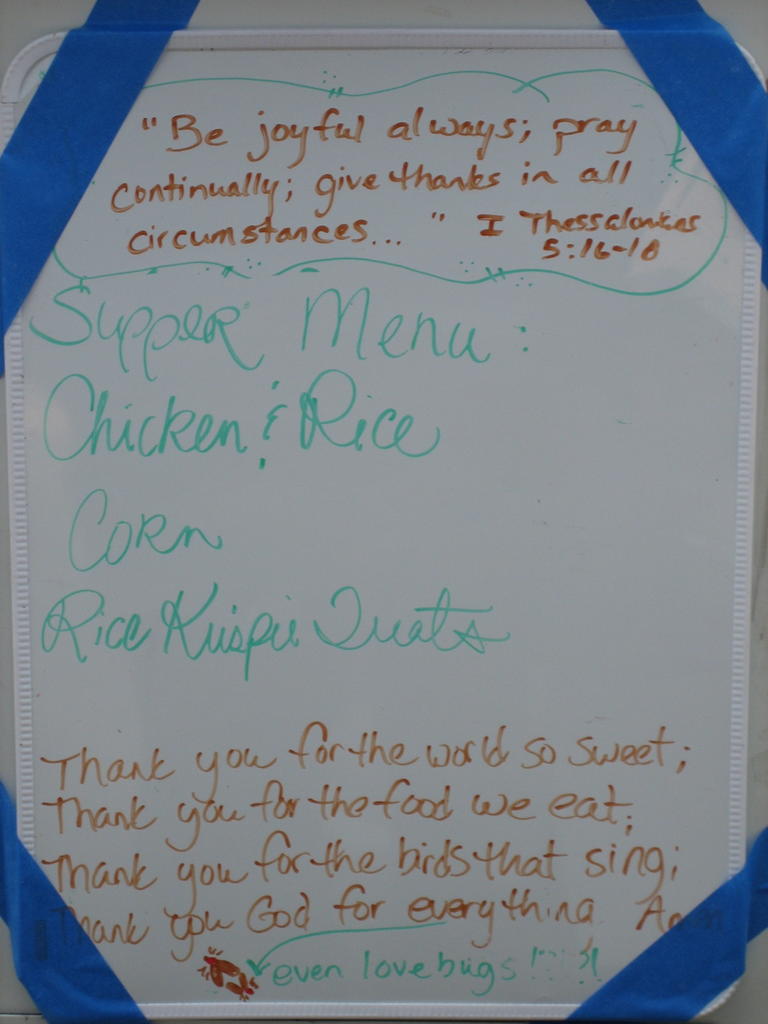
The Salvation Army has been doing a marvelous job of feeding thousands of Katrina victims in places where there was no other food available. Out in the community of DeDeaux, a Salvation Army truck dispenses meals every day. Here (right) was the menu for the other day. If you click on the photo to enlarge it, you can see that they are thanking God for everything--'even love bugs'.
There are very few mosquitoes out here in DeDeaux, but everything outside has 'love bugs' swarming around it. Fortunately they don't bite, they just tickle. Here's a close-up.
 Serving with a smile was Mrs. Julie Whiten of Annapolis, MD; her husband is also here with the Salvation Army relief effort.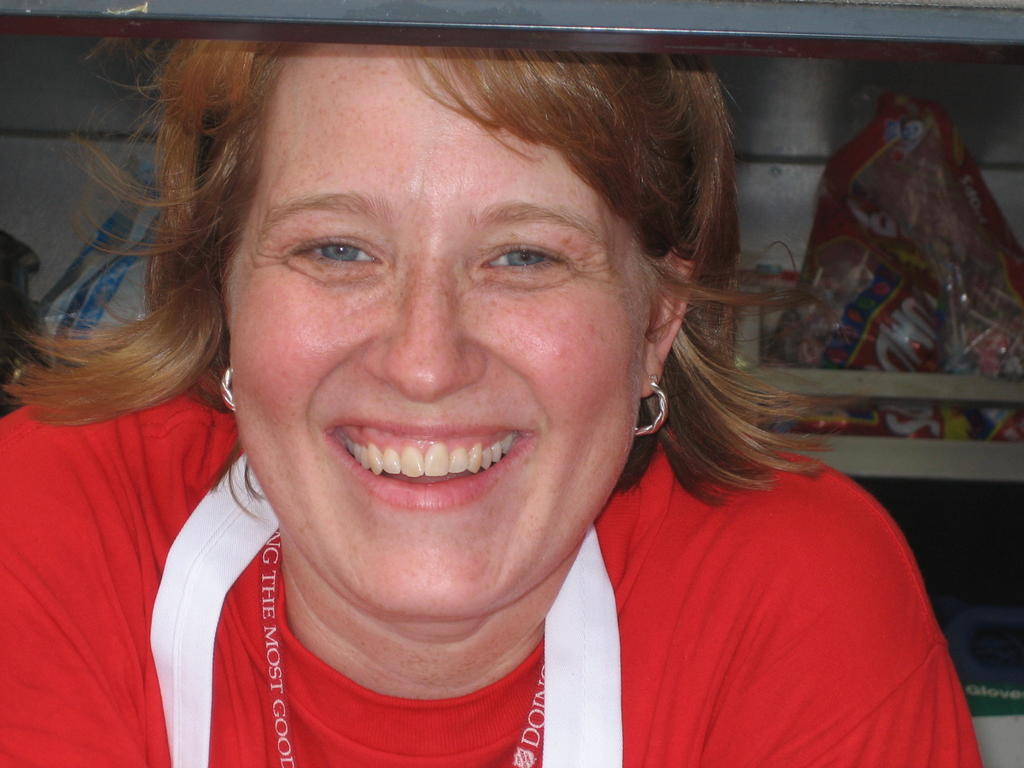
That night I squeezed into a table a Chilis with a group of Southern Baptist Disaster Relief volunteers--mostly pastors--from Iowa, who are doing cooking, counseling and other tasks, in conjunction with the Salvation Army's effort here. Another Chilis customer came over to thank them for coming to help.

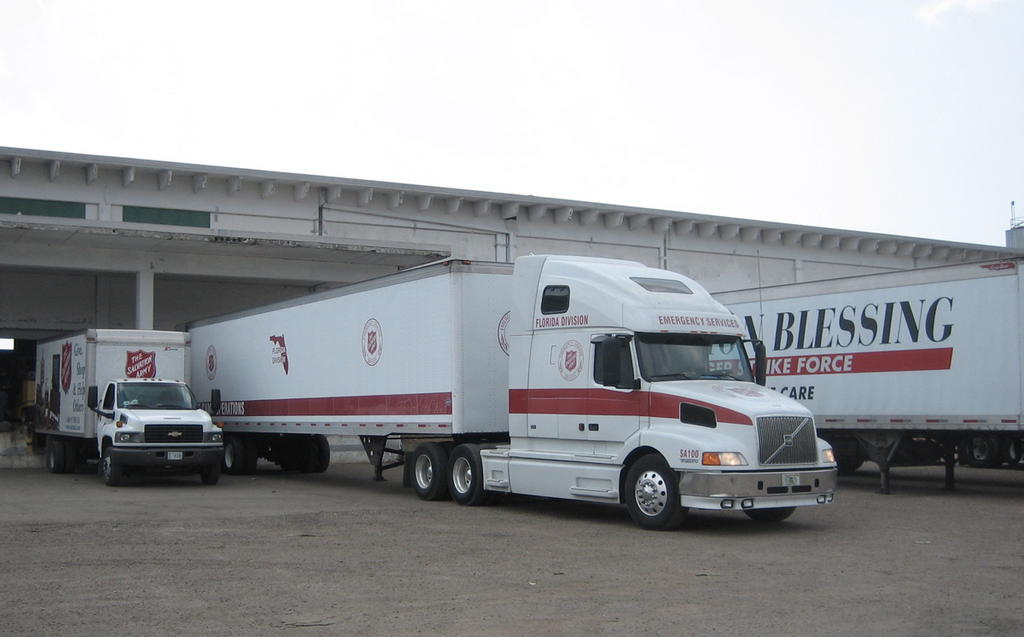 Next morning I went to see the Ohio volunteers' kitchen at the huge Salvation Army distribution center (where I first went when I came to Biloxi following a Salvation Army convoy from Jackson). There are a number of these kitchens in different places on the Gulf Coast.
This kitchen feeds 5,000 a day. There's more than bread and fish left over; they have trouble getting rid of the waste.
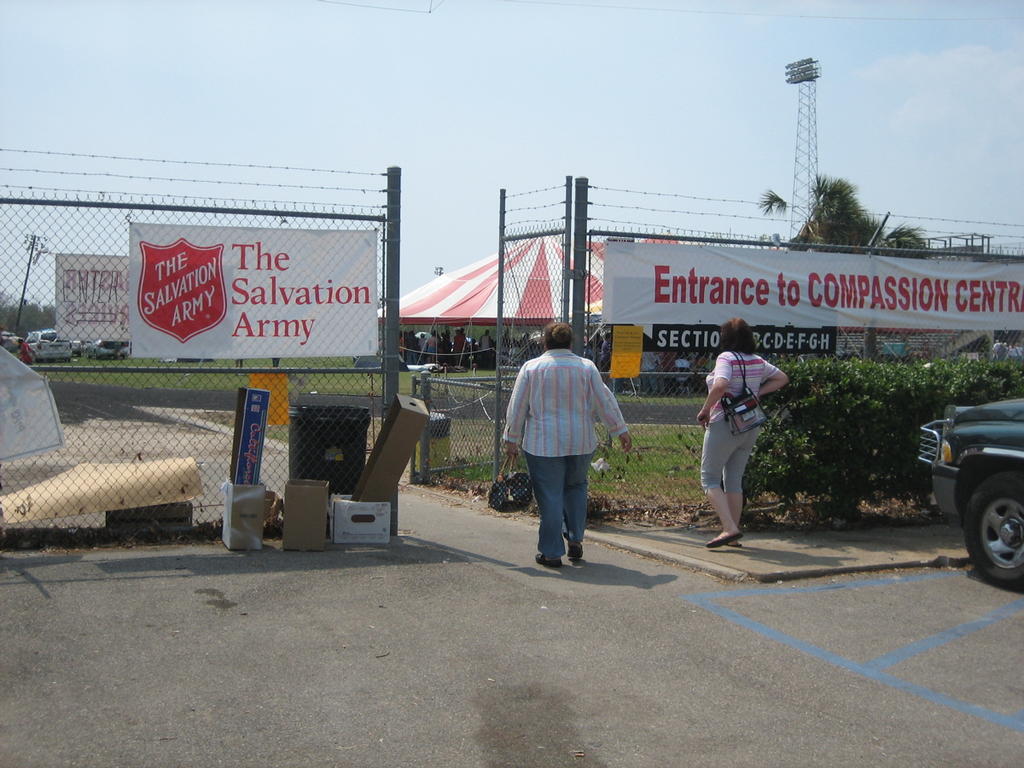
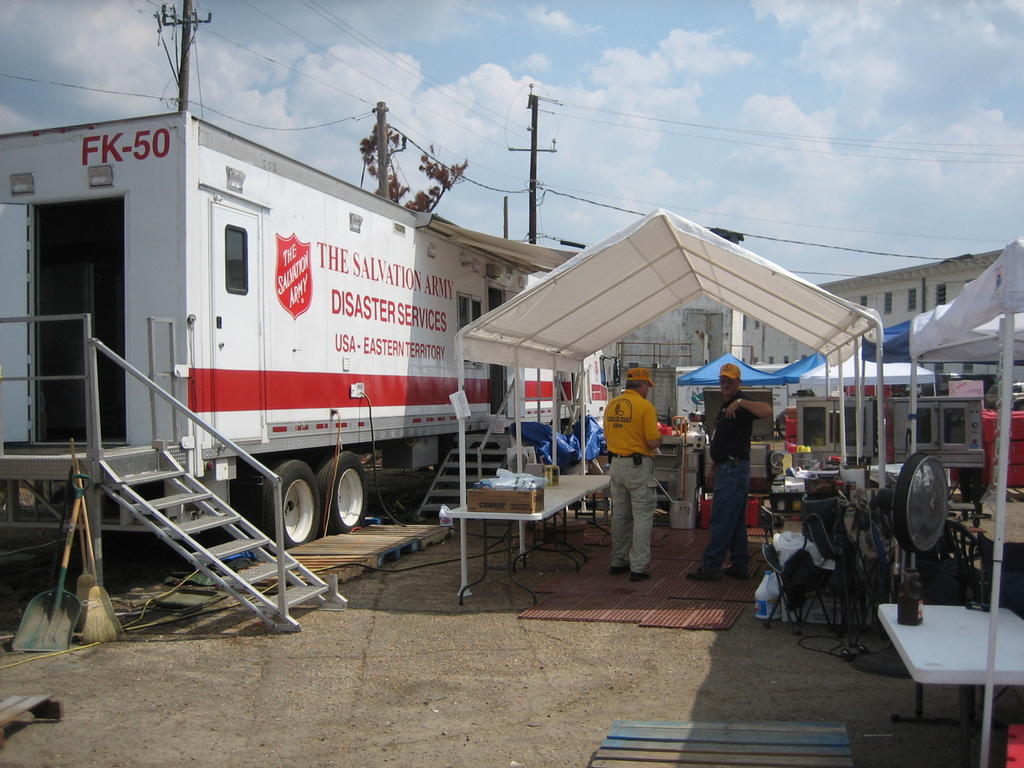 Biloxi's 'Yankie Stadium' (below) is the site of 'Compassion Central' where the Salvation Army and others feed the bellies and souls of Biloxians.
 The photo below shows the SA/Southern Baptist meal tent.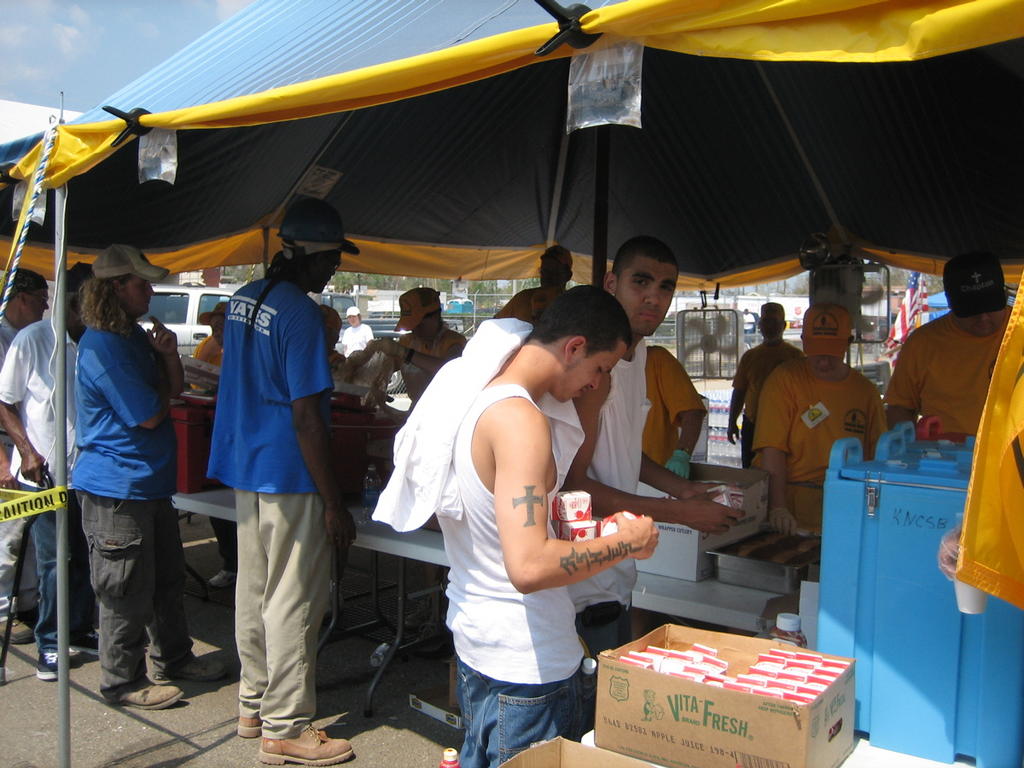
Today the Kids' Kamp day-care tent was being used for an old-fashioned revival meeting, filled with spirit and the Spirit. The evangelist had driven 700 miles the night before to be in Biloxi for the meeting.
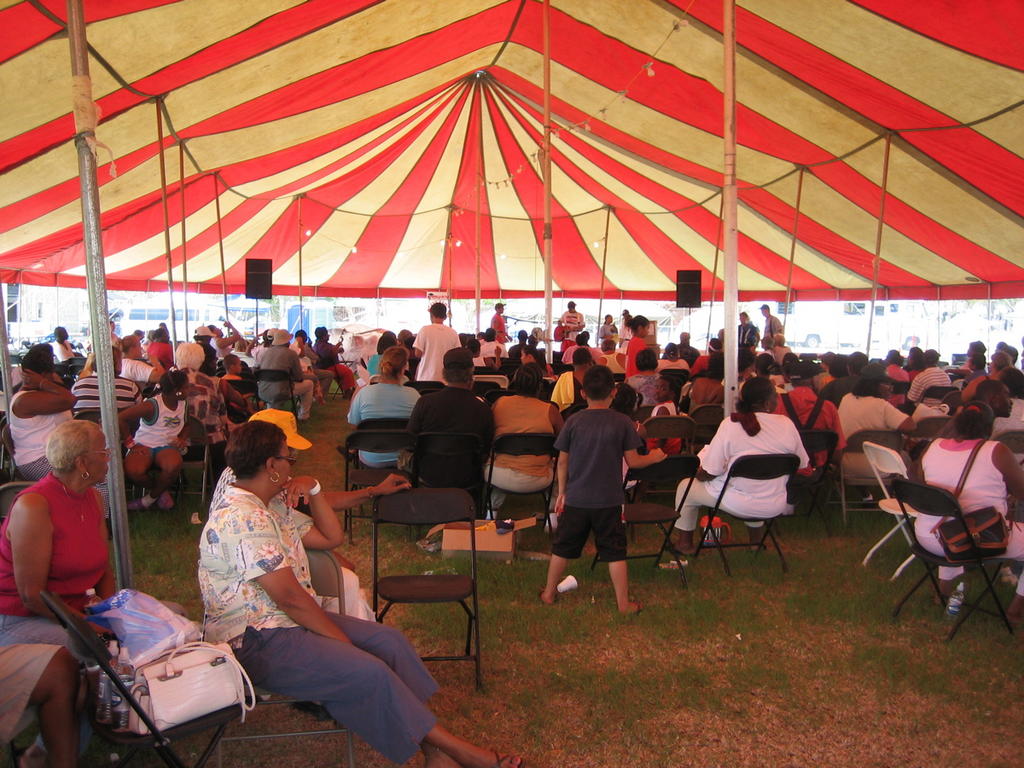
He was OK, but the ample-sized black lady who preceded him really got the crowd fired up.
She emphasized that Katrina had brought down the mighty along with the small, and that we--black and white, rich and poor--were in this together. Amen, sister!
Dr. John Goodheart, Ph.D.
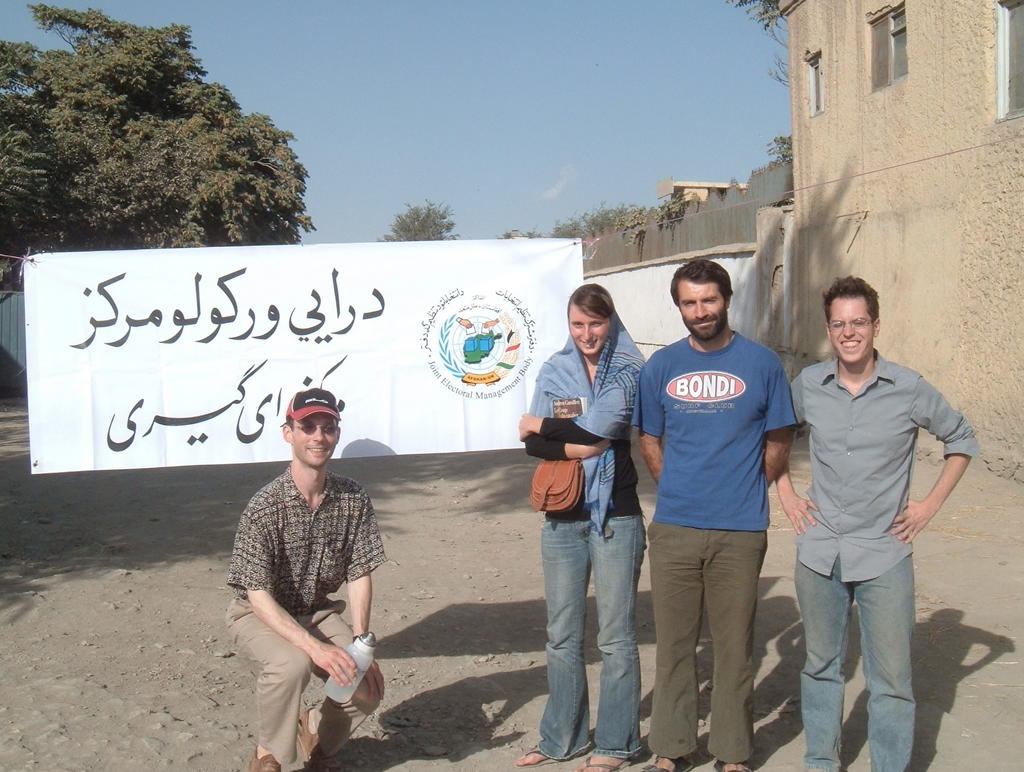 My son John is in Kabul, Afghanistan, as a statistician for a consulting company doing public opinion surveys there. John also has the 'irrepressible urge to make things right' gene. Finding a way to do that with a mathematics Ph.D. is a little harder than with an M.D., so I congratulate him on his persistence in finding a way to help improve the world, one equation at a time.
His team was in Kabul on election day, last Sunday. Fortunately, there was little or no violence. He writes:
Tuesday, September 20, 2005
Dr. Goodheart goes Hollywood
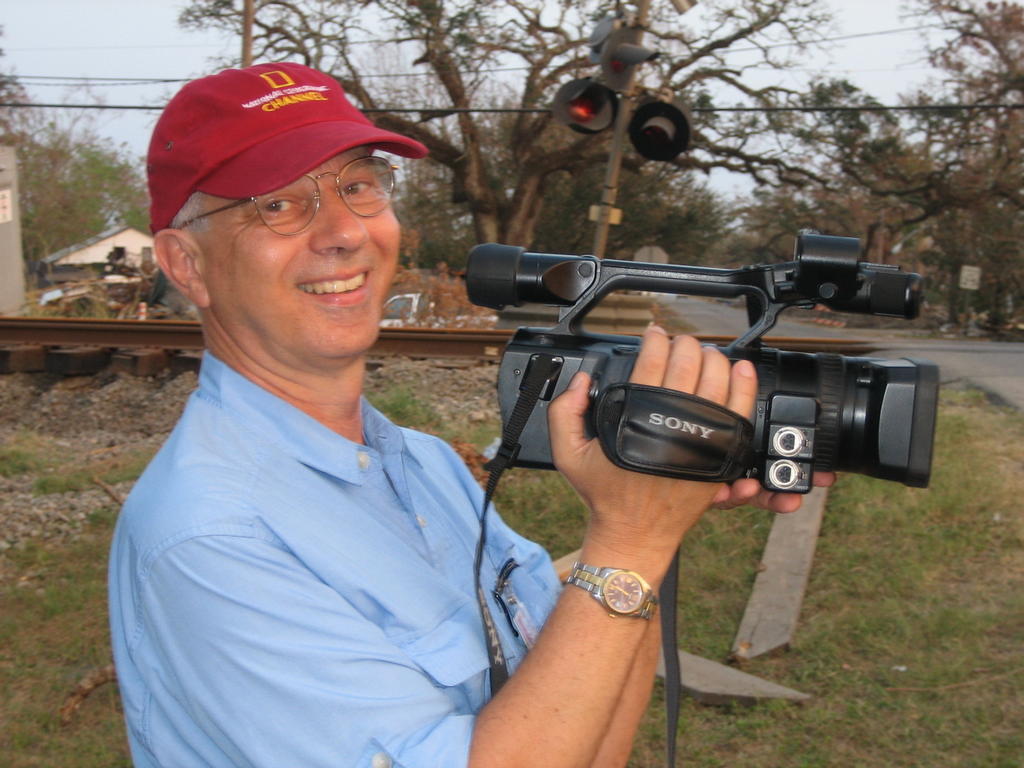 Do we have to change the name of the blog to Dr. Swellhead?
Thanks to links to Dr. Goodheart by Powerline, Mudville Gazette, Hugh Hewitt and others, someone in Towers Productions in Chicago, a company that makes documentaries for the National Geographic channel (they made the highly regarded “Inside 9/11”), saw my blog. They are in the process of making a 2-hour documentary covering Hurricane Katrina and the disaster relief response. I guess they liked the ground-level view of what’s going on in the Biloxi area, so they asked if I could meet with their crew.
We arranged to meet on Sunday. Sarah Huisenga, Ralph Madison and Keith Francis arrived from Mobile in Ralph’s big Ford van, loaded with videography equipment and organic food. The first thing I learned was that Keith and Ralph are now homeless, their homes in New Orleans having been flooded by Katrina. The second thing I learned is that--organic trail mix notwithstanding--these are good folks with lots of empathy for the victims of Katrina and a determination to tell their stories.
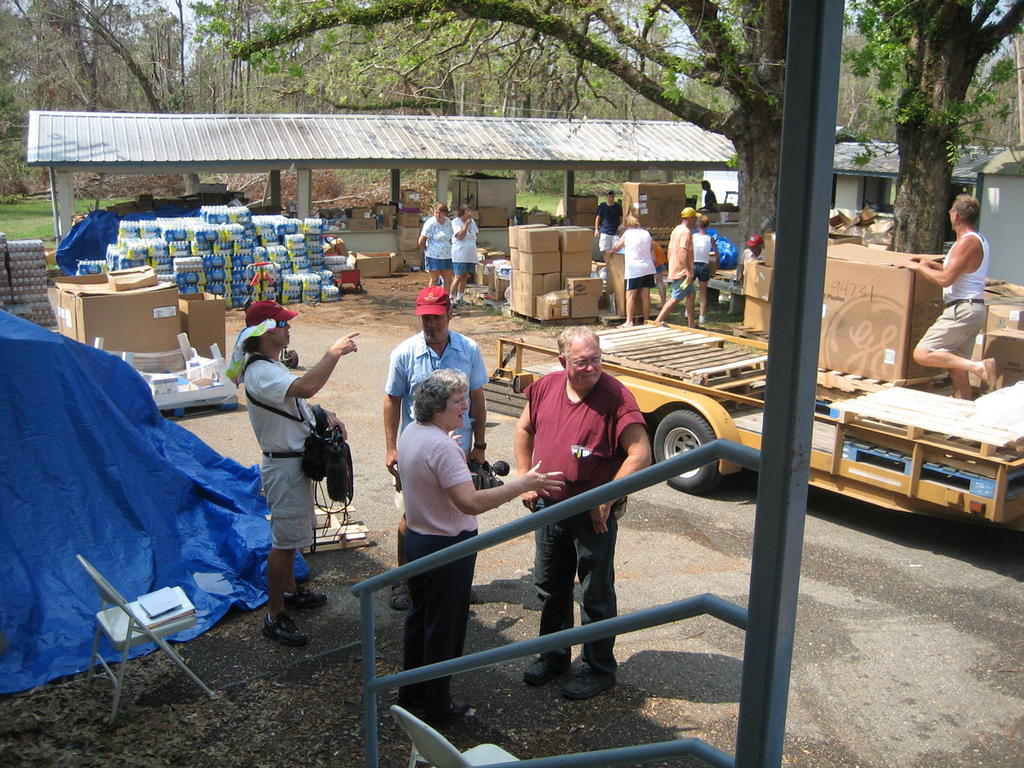 They’ve been interviewing people like General Honoré as well as getting video of the flooded areas in New Orleans, but had not yet seen the hardest hit areas of Mississippi.
 Sarah, the producer, and I talked about where we might go and which of the stories I had written about might be good for the documentary. We decided to go back to the school in the rural community of DeDeaux. It’s been about a week since I was last there.
We found the school still a beehive of activity. Supplies are being delivered and distributed; the Salvation Army is distributing hot meals from their truck; and a different team of physicians had already come and gone. Medications and medical supplies were now being kept in the school building, which is now air-conditioned (hooray!). Three people are now keeping the medical aid station going: Keith Hunter, Jeremy Alford, and Alanna Edwards. They have brought in substantial new supplies, and Keith is making trips to Walgreens to fill the local folks’ prescriptions; Walgreens is charging it to FEMA. Keith and Jeremy are scouting the surrounding communities for shut-ins and others in need.
 Ken Barber (in the red T-shirt, left) is the local gentleman (he married a woman from Dedeaux 30 years ago) who is now heading up the community effort. The National Geographic crew interviewed Ken; then spoke with Dennis, a man who owns a small business in Connecticut who closed up shop and brought a pickup, trailer, and tools down here
on his own.
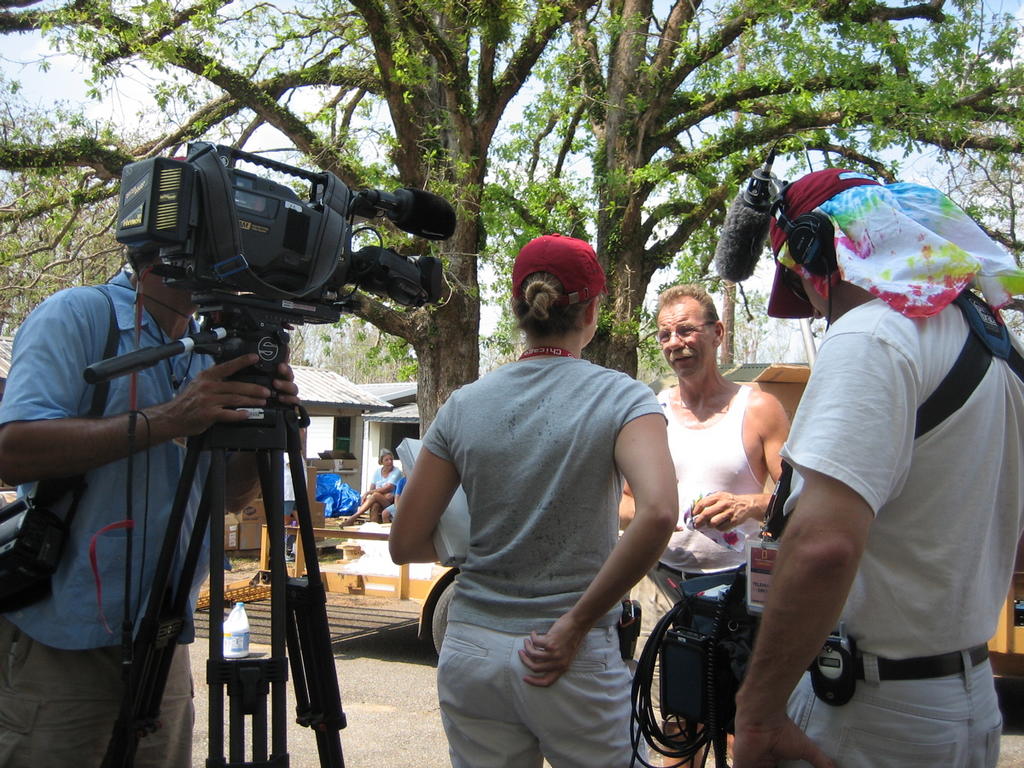 Dennis has gone from community to community, trying to identify needs and get supply distribution started. Once started, he then moves on to another community. Dennis, like many of the folks who have come down here, is a little hyper, but that seems to be what separates the people who wanted to come from the people who actually did.
 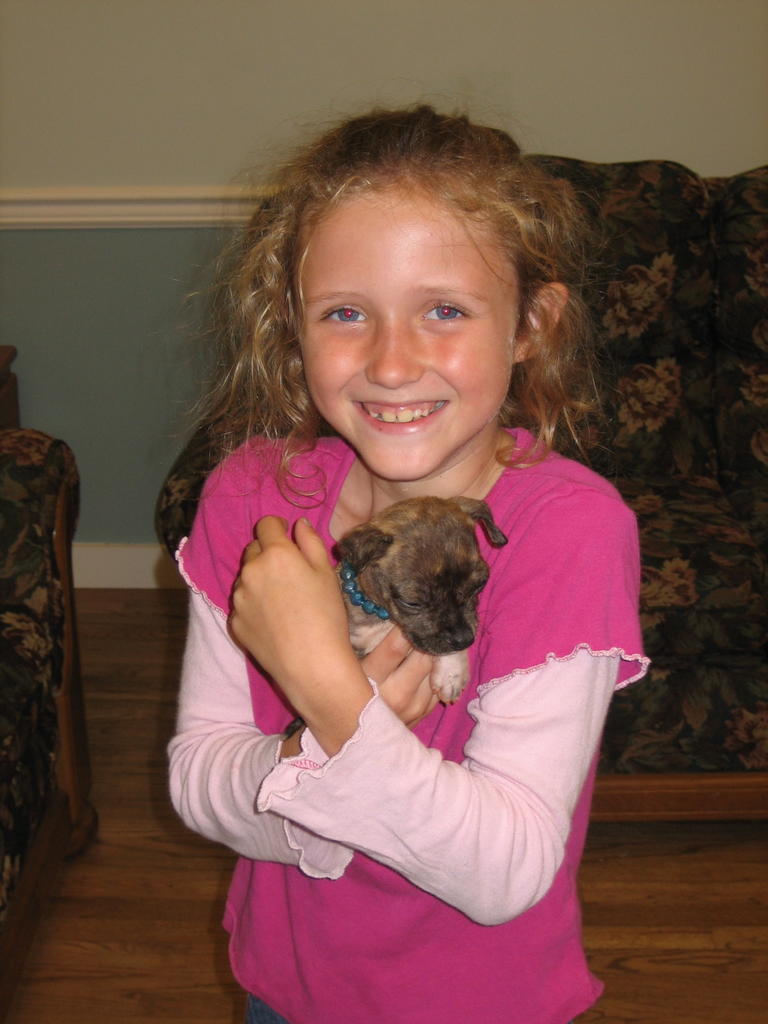 We managed to scrounge up some patients who needed to see a doctor so they could video my taking care of them and pretend that I spent all my time doing this instead of traveling around with a video crew.
Left is Branlyn with her puppy.

Right: Two Sarahs.
Since we were close to two of the coastal communities that had been hardest hit, Bay St. Louis and Waveland, we drove toward the beach so they could video the damage there. On the way down, I could tell from their excited reactions--to the trees blown over and the houses that were wind-damaged—that they hadn’t yet seen the real picture of Katrina’s devastation.
As we got closer to the shore—but still several miles away—we stopped to video an area where a bunch of cars were strewn beside the road, apparently swept there by the storm surge from a used car lot.
 The crew has three high-definition video cameras. The big Sony is used by Ralph for the primary video; the others are for back-up and for documenting the process—the “Making of the National Geographic Katrina Special Documentary” video. Below, right, is Ralph shooting the video, Sarah doing back-up, and Keith doing the “Making of…”video. So this is a photo of the video of the video. Whoa….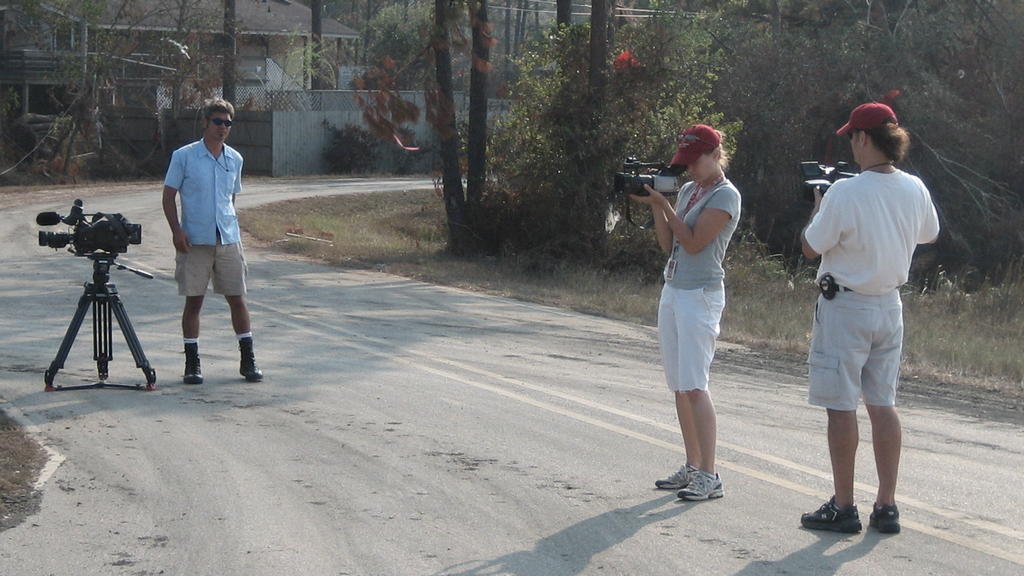
As we drive closer to the shore, the damage gets worse; but then we come to the railroad tracks, the bed of which is on a berm above ground level, so that they served as a barrier to the storm surge.
The tracks here are twisted (one is reminded of what Sherman did to the southern railroads, heating the rails and twisting them around trees to make “Sherman’s hairpins”) and the bed eroded.
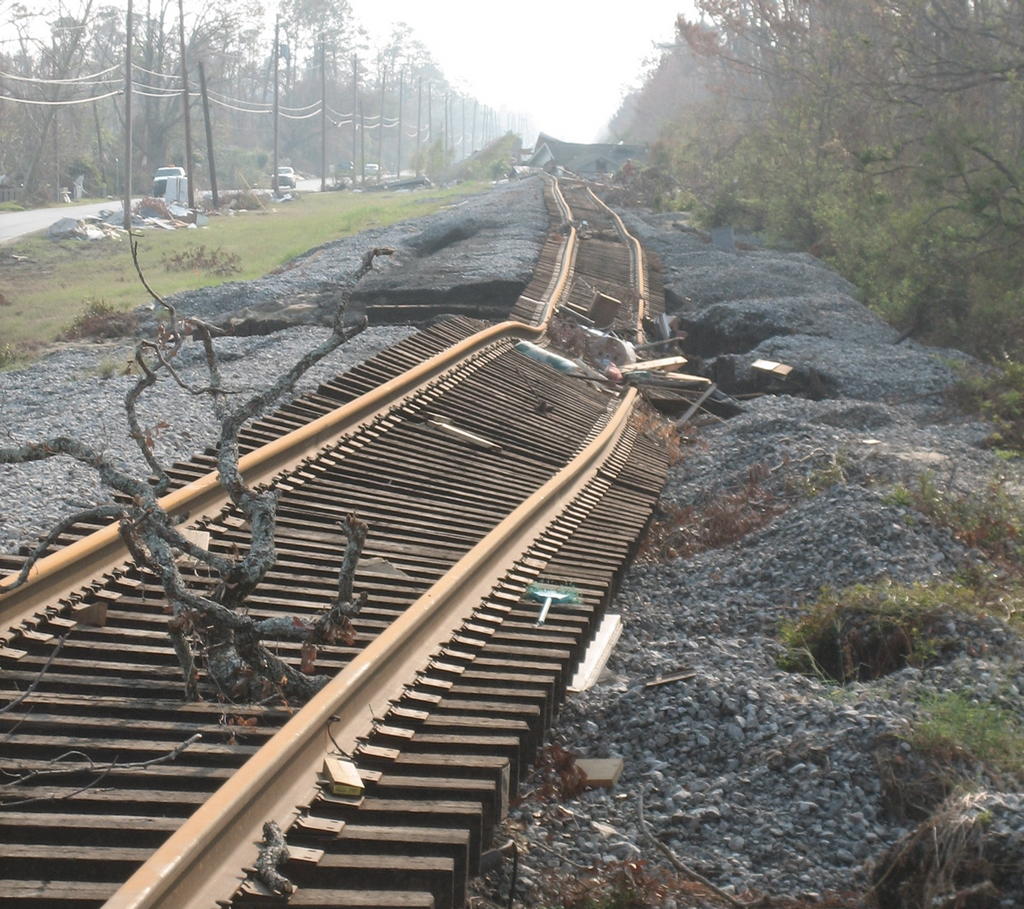 Throughout the Mississippi Gulf coast, “south of the railroad tracks” is where the devastation is worst. Here in what was Waveland, barely a house is left standing for miles. We drove along the shoreline road, and our hard-bitten journalists were struck dumb by the miles of rubble that used to be Waveland.
Arriving at St. Stanislaus College in Bay St. Louis, we found a dormitory that—after Hurricane Camille—had been built to take 300 mile per hour winds; the ground floor is a parking garage, the dormitory rooms on the second floor, on concrete pylons. A man familiar with what happened at St. Stanislaus during the storm told us that about 50 students—mostly international students who had no homes to go to—and the brothers on the faculty rode out the storm right there in the dorm rooms. They could hear cars in the garage below being battered into the concrete pylons beneath them. Of all the hundreds of buildings that had been standing along miles of beach, only this one survived intact.
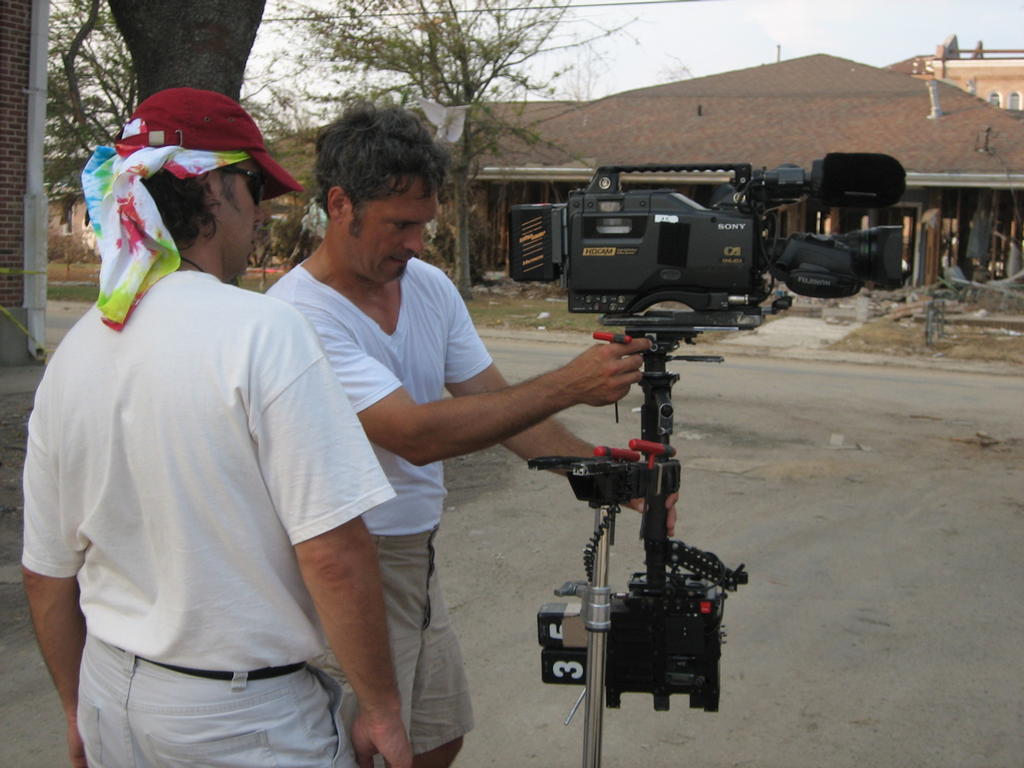 The video crew decided that the best way to try to convey the enormity of the devastation would be to have a single continuous Steadi-Cam shot out of the side of the van while we drove along several miles; then to show that in time-lapse mode.
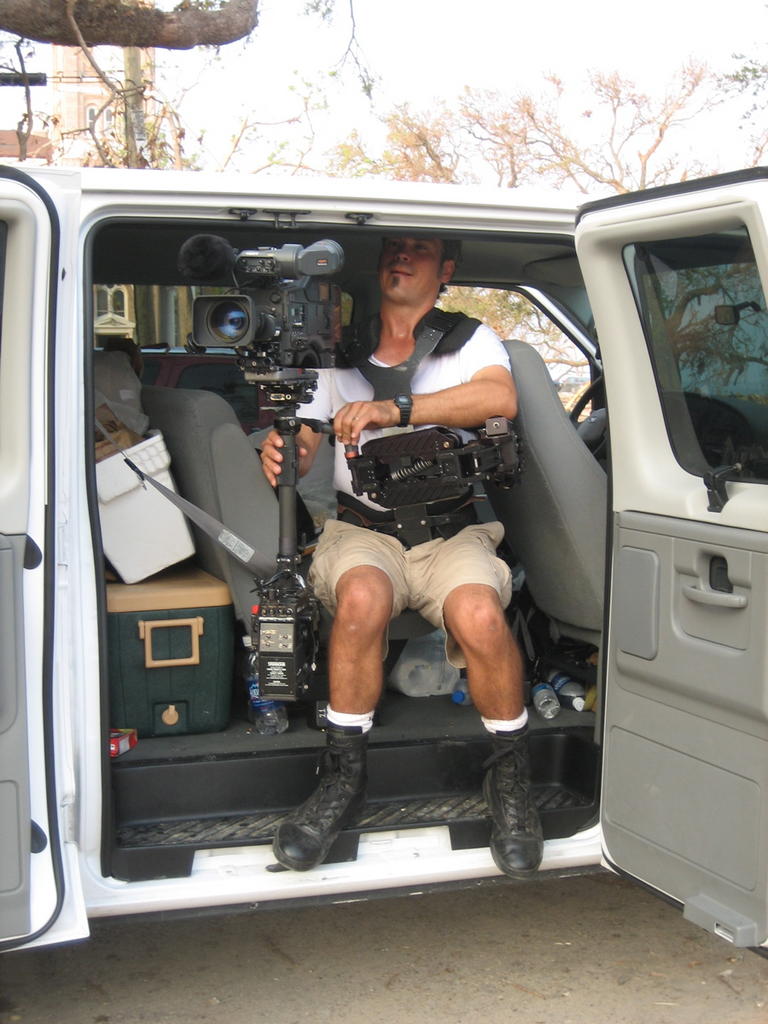
 I had never seen a Steadi-Cam before; it is a remarkable contraption; it has no active gyroscopic stabilization, only a counterbalance mechanism and pivoting mechanisms that keep the camera steady while the operator walks, runs, drives, etc. Think of a show like “Cops” in which a cameraman follows the police chasing a ‘perp’. Without the Steadi-Cam, we’d all get seasick watching it.

Ralph demonstrates the effectiveness of the Steadi-Cam by jumping up and down (the rig weighs 60 pounds with the camera!) while the camera remains immobile. We tie open the doors of the van; Ralph sits in the open doorway with Keith holding him; Sarah drives; and Dr. Goodheart, videographer, gets to use the HD video camera to document the whole thing.
 I have high hopes for this National Geographic documentary, because I found Sarah and her crew to be immensely sympathetic to the people we talked to, and as awestruck as I at the incomprehensible scale of the devastation wrought by Katrina. Please keep an eye out for it on the National Geographic channel in about seven weeks. You still have time to run out, buy a 50-inch HD LCD TV, and get the premium cable package that includes the high-def National Geo channel.
Full disclosure: Keith wanted to make a contribution to the effort, and the next day brought back the dark chocolate I requested for myself, and three fresh pies for the nursing staff at Biloxi Regional.
Monday, September 19, 2005
An oration to real heroes
Eat More Chili! [Updated]
Chili's is great!!! Please be sure to eat at Chili's on September 26. Chili's is donating 100% of their profits on Sept. 26 nationwide to St. Jude Children's Research Hospital. For more info go to:
www.createapepper.com Chili's is in the midst of a national pepper coloring campaign to raise funds for St.Jude.
St. Jude is providing treatment for 80 very sick children who were being treated for cancer and other catastrophic illnesses in hospitals impacted by Katrina.
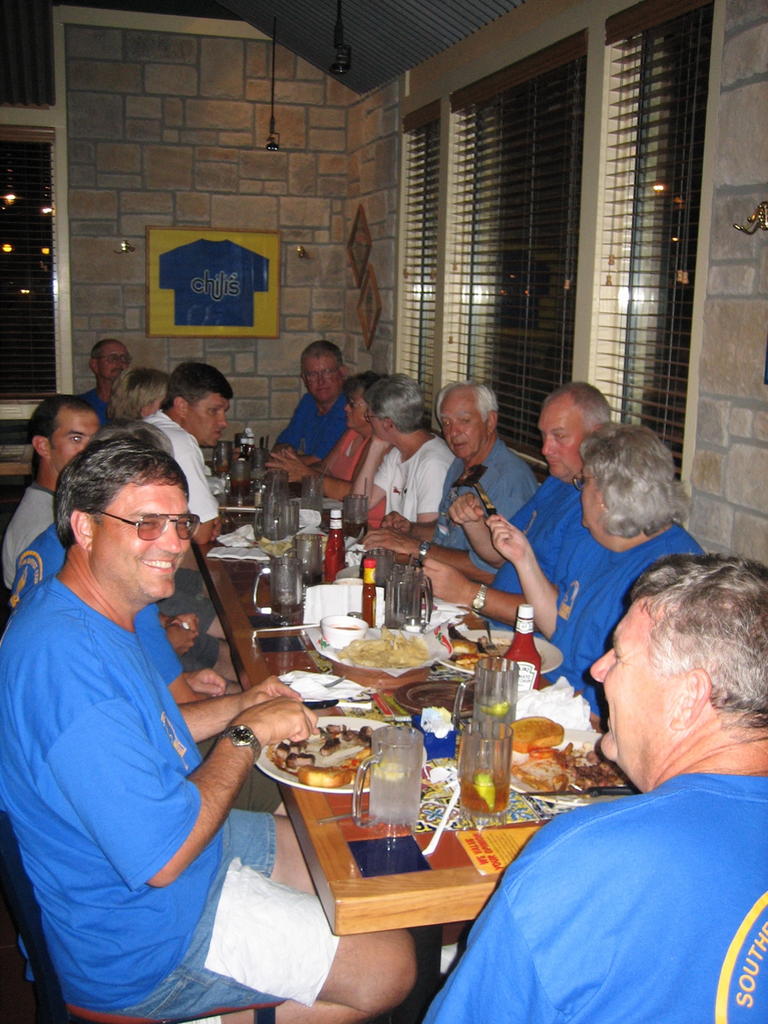 I was trying to get together with my FDNY buddies John and Chris at Chilis in d'Iberville (pronounced here "dee EYE ber vil" on Saturday night. Chilis had been closing at 5 pm, as the 8 pm curfew required them to get the restaurant cleaned up and their staff home by 8. Now they are 'closing' at 8, with an 11 pm curfew. As you can imagine, given the hours of most relief workers, we weren't getting many dinners out. John and Chris kept making plans with me, but they always ended up working too long. This time we were going to make it--I called ahead to Chilis, we were all set. Except that Chris hurt his bad shoulder, and John was not feeling well.
I was already at Chilis by myself, so I started talking with a bunch of folks wearing Southern Baptist relief T-shirts waiting outside. They were Tennessee Volunteers (natch), and their special jobs are either (1) chain-sawing fallen trees or (2) 'mudding out' houses. When they get tired of one job they switch to the other. Unlike me, this is not their first hurricane relief work. They invited me to join them, making a party of 23.
 Chilis managed to find a corner in their crowded restaurant for us, and Danny (photo) served us with alacrity and humor. His own place got minor damage in the storm, but his folks' place had the roof cave in. Danny told us this about Chilis: they brought in trailers for their employees to stay in if they lost their homes; they delivered food to the families of employees; and they paid their employees during the time the restaurant was closed. Chilis is now the destination of choice of Biloxi's disaster relief workers. If you see a Salvation Army Disaster Relief truck heading north on I-110 about 7 pm, you can bet it's heading for Chilis. So I say: Eat more Chili!
Saturday, September 17, 2005
All men are brothers, and that's why we don't speak to them
 From my previous posts about the plight of the Vietnamese community here, you can probably tell that I was quite moved by their stories of being refugees for the second time in their lives. Had the flood waters risen another three feet, there would have been hundreds of them drowned in their little attic shelters. And now the viability of the community, already challenged by the economics of the shrimping industry before the storm, is now very doubtful. Yet despite the desperate nature of the situation, the Buddhist and Catholic Vietnamese communities are carrying on a kind of Cold War here. It got so bad today that I walked off in a huff and a couple of choice curse words.
Here’s what I’ve learned over the last couple of days. Thursday night and Friday, Myhanh and I hung out with local Vietnamese. Myhanh spent the night with the family of one of the physicians who works in the Gulfport hospital, and was talking about setting up a better medical care clinic in a tent, rather than using the tiny area in the back of the Buddhist temple. From her and from observing the situation the next day, it is clear that there is a lot of suspicion between the Catholics and Buddhists.
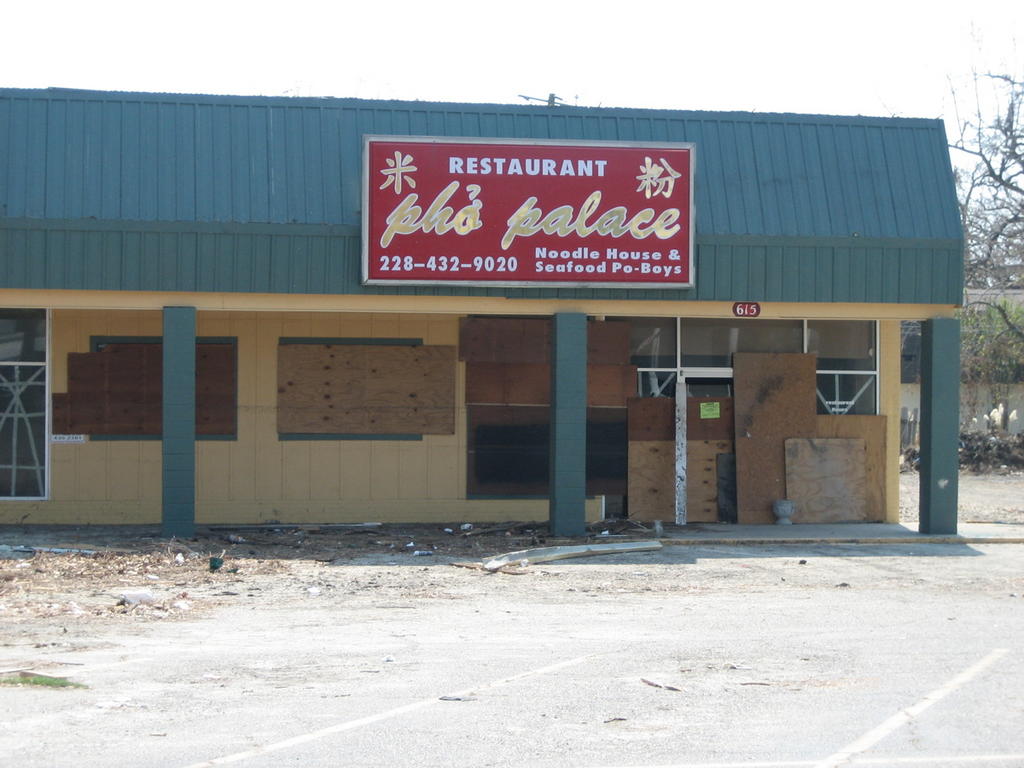 From Myhanh, I heard that the church had run out of their donated supplies of rice andd fish sauce; and the temple still had a large supply. But the Catholic parishioners would not come to the temple to ask for it. Instead they considered that the supplies had been ‘misdirected’ to the temple. At the temple I met a local businesswoman, Anna. She has lived in Biloxi for twenty years; she owned a very popular new restaurant, the Pho Palace, which had been in operation only a month before the storm, and which took her life’s savings. She also owned a travel agency and several rental homes.
All of this was destroyed by the flood waters. Despite her husband’s desire to leave, she wants to stay here in Biloxi. Anna told me that a Mr. Henry Lee, an Asian businessman in San Jose, California, had donated $100,000 of oriental food supplies, and arranged to have it trucked to Biloxi to be delivered to the (entire) Vietnamese community. But depending on whether the truck unloaded at the church or at the temple (the two are next to each other), these were now “the Buddhists’”or “the Catholics’” supplies.
During this discussion yesterday, two officers from the hospital ship USN Comfort and representatives from Project Hope arrived. We told them of the small clinic set up by Dr. Wing in the Buddhist temple, and warned them of the bitter political conflict. We all walked over to the Catholic church, where Father Dong was offering the use of a large, empty warehouse. It has an intact roof and clean concrete floor, so it would be better than a tent for providing medical care; sheets could be hung for privacy in exam rooms.
We asked Father Dong about the potential problem of the clinic being shunned by the Buddhists if it were on Catholic land; we even saw that access to it could be cleared from another street so the Buddhists wouldn’t have to cross through the Catholic churchyard. It looked like it was going to work--although I still sensed from Father Dong's response that he wasn't working with the Buddhist monks at the temple.
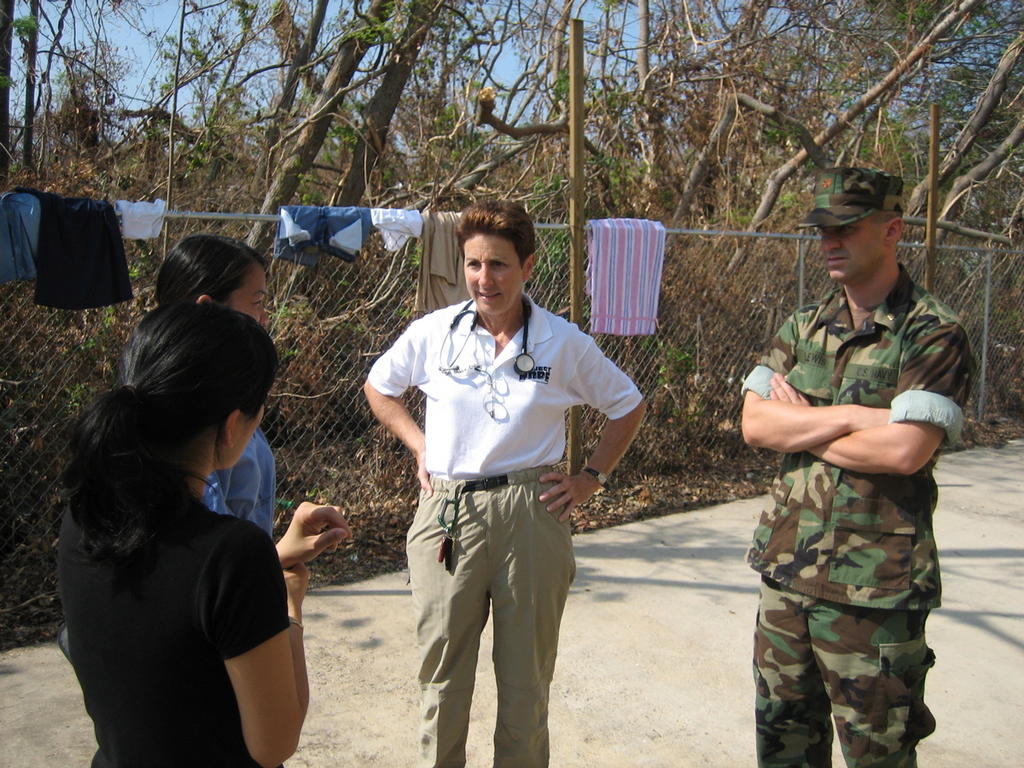 Today, I found Navy and Project Hope physicians working at that new site, but they needed more medications. So of course we walked over to the temple, where Dr. Pham was seeing patients, and where the donated medications were located. When we proposed moving the clinic to the new site where more people could be served, Dr. Pham said we were ‘overstepping’ because the medical supplies—although intended for the entire Vietnamese community—had been delivered to the temple, and so now ‘belonged’ to the Buddhists. I pointed out that many of the supplies had been brought by Myhanh and me, donated by FEMA (Myhanh had spent the previous evening sorting the medications by category to make it easier; now they were all blended.) It was at this point that I used what my old friend and patient Brian Gallagher told me were “The two most beautiful words in the English language”, and left.
I’ll be going back to the new site, to drop off some diabetes medications which they don’t have. Then I think I’ll go to lunch with my FDNY buddies, and tomorrow perhaps over to the clinic in d’Iberville if they need me there. This is the United States of America. We are witnessing the greatest outpouring of personal, organizational, and governmental generosity in the history of the world, and some folks don’t get that we don’t worry about where the rice was dropped off. There is plenty to go around, children, don’t fight over it!
OK, let’s not leave it on such a negative point.
The morning had started out grand: Yesterday I asked building maintenance at the hospital to get Old Glory off the roof so she could hang properly again from the front of the hospital. The sight of her had been, I know, an inspiration and lifting of the heart for many. Well, they tried, but the flag was still not hanging properly. I found the stairway to the roof and went up, but a flag this size is really heavy, and I wasn’t able to move it into place.
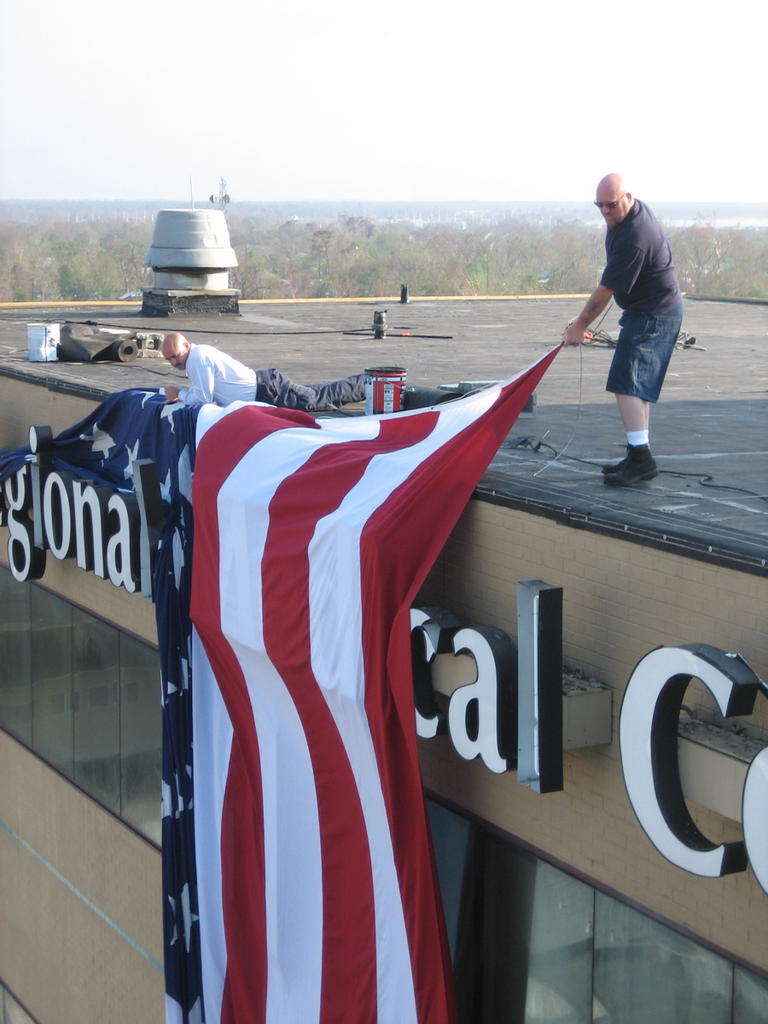 This morning I asked my buddies to help me get her set right, and of course they set to work.
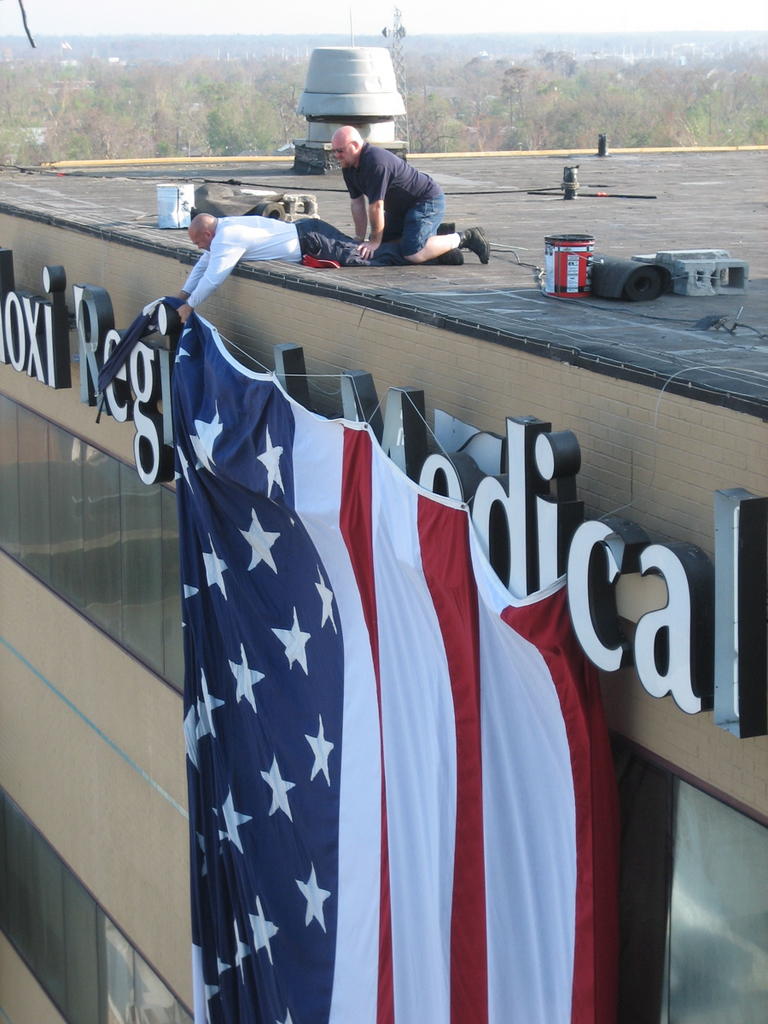 Here are John Seiler and Chris Edwards, FDNY (ret.), restoring Old Glory to her rightful place.
What is that which the breeze, o'er the towering steep,
As it fitfully blows, half conceals, half discloses?
Now it catches the gleam of the morning's first beam,
In full glory reflected, now shines on the stream:
'Tis the star-spangled banner: O, long may it wave
O'er the land of the free and the home of the brave!
A Tale of Two Hospitals
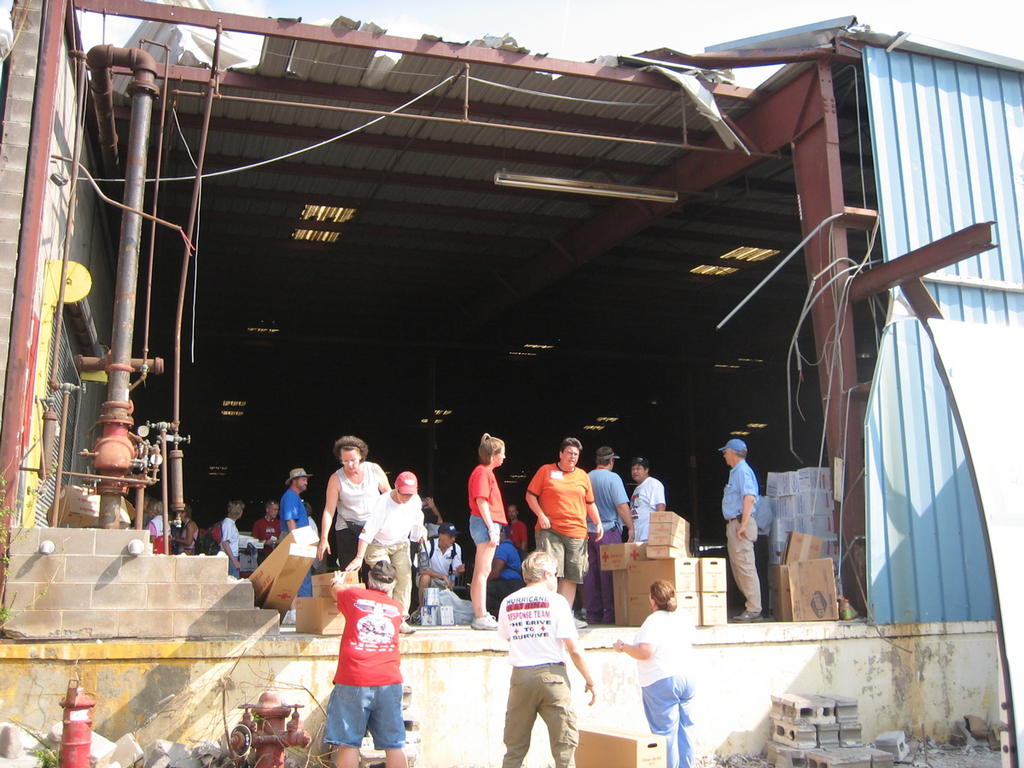 On Thursday, September 15, Myhanh and I met Kim at the relocated Red Cross health care headquarters in Gulfport. As you can see from the photo, the air conditioning is now more natural, with breezes coming off the Gulf. We then set out to assess the health care facilities in Bay St. Louis, where the local hospital, Hancock Memorial, had been flooded and was closed.
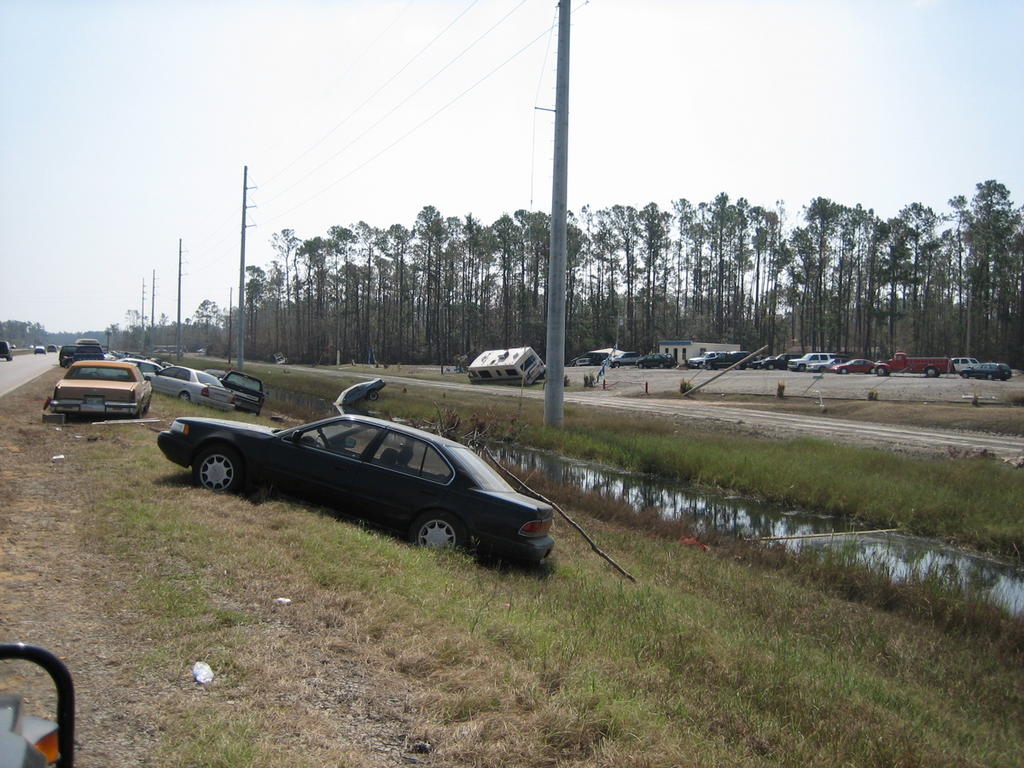
The drive down to Bay St. Louis showed more scenes of the awesome power of the storm; cars overturned, strewn around the side of the road.
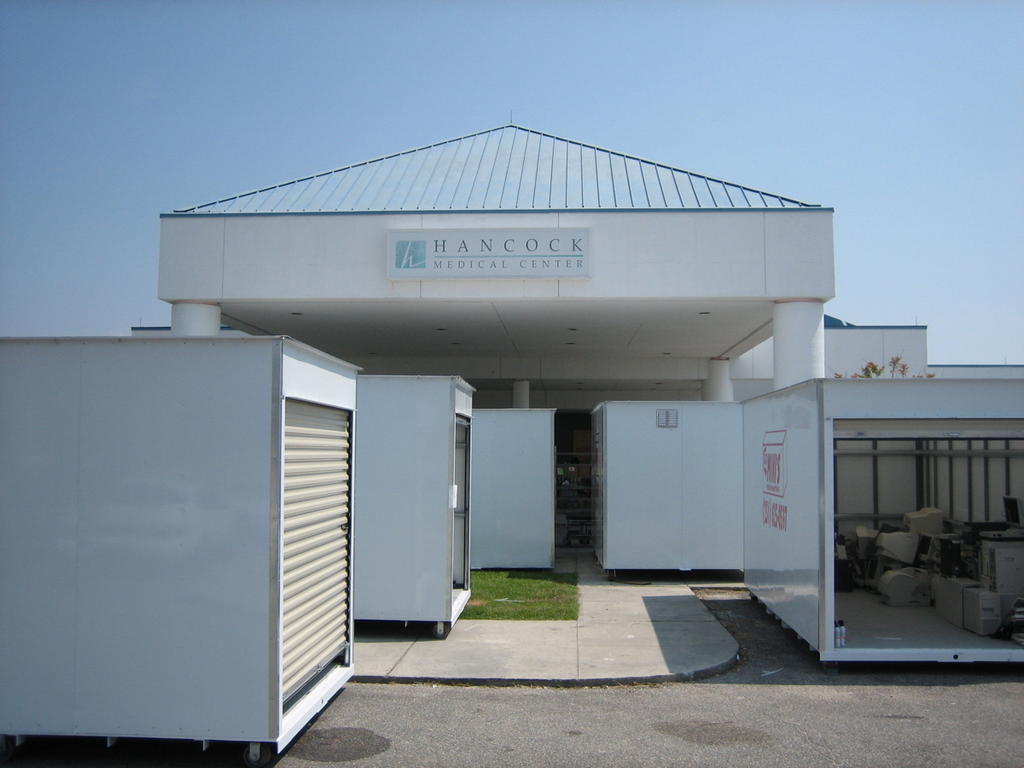
 Here’s what we found at Hancock Memorial: a beautiful campus and facility from the outside—washed clean, I guess.
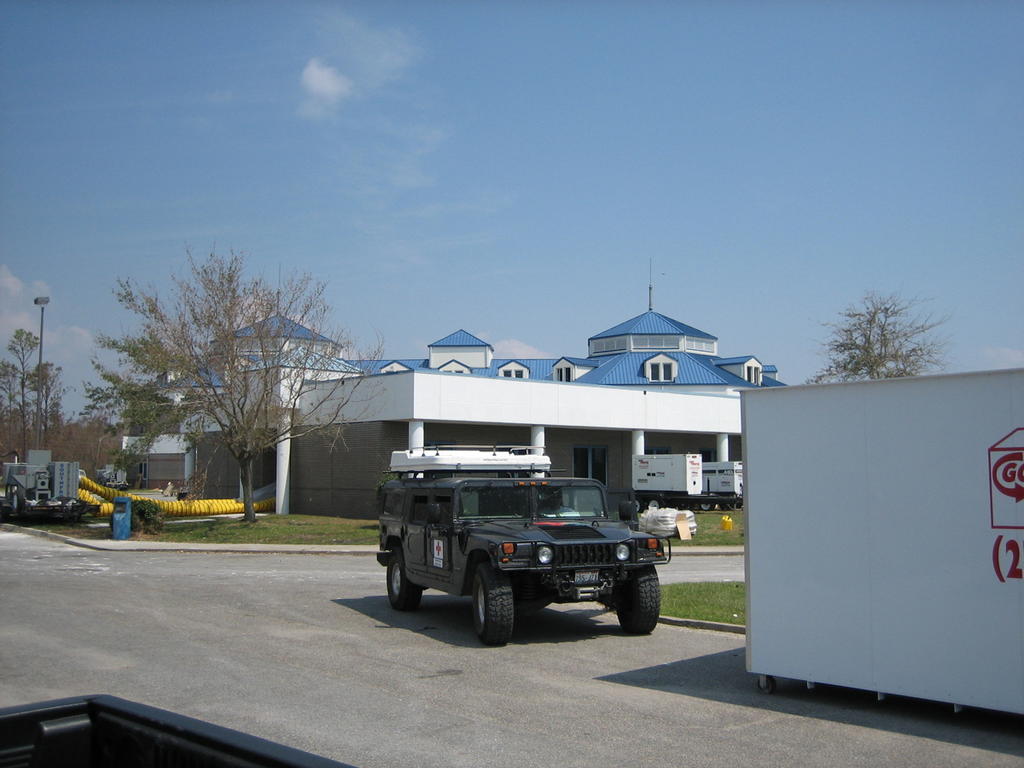 In front, a bunch of containers; to the side, a tent city of military folks; and under the front portico, nurses enjoying a lunch of tuna salad.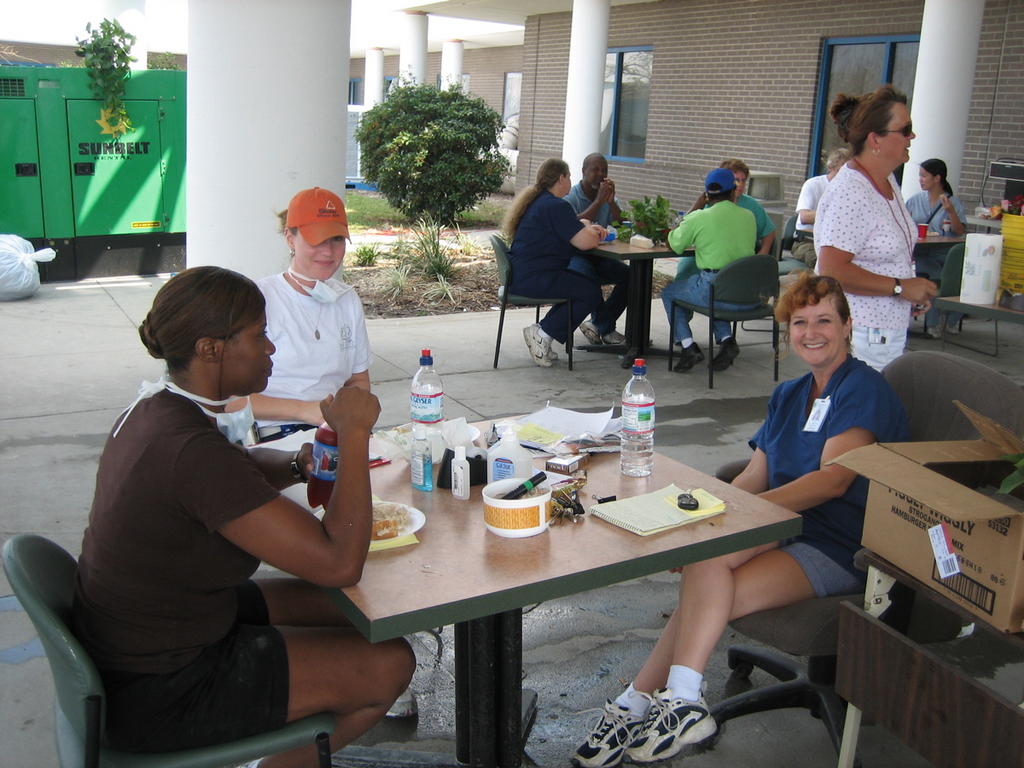
Angie Gambino is the Chief Nursing Officer of Hancock, and she gave us a tour—probably very experienced at this by now. On the night of the hurricane, the staff transported all the patients to the first floor because of fear of hurricane winds. Then as word came of the flooding, they transported the patients back upstairs—all except one 600-pound man who had had to be carried downstairs by the National Guard and who was evacuated rather than carry him back upstairs.
They then watched through the second-story windows as the parking lot filled with waters from the Gulf of Mexico, usually 5 miles away. Angie saw her Dodge Durango SUV disappear under the water, then saw the parking lot filled with whitecaps (‘nurses’). They must have been terrified.
Angie praises God that they did not lose any patients or staff; but 70% of their staff had their homes destroyed. Their two outlying clinics were also destroyed. Now here is her staff having a leisurely picnic under the portico, enjoying the Gulf breeze, cheerful as can be. “We can make it”, said one nurse with a lovely smile.
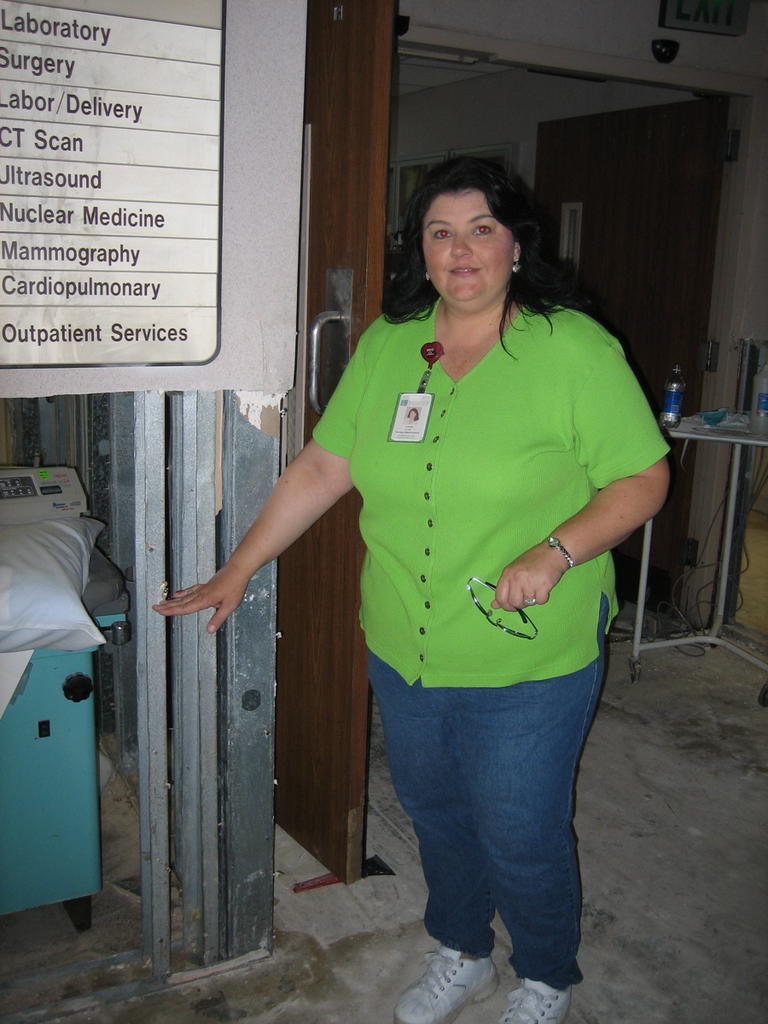 Angie shows the level that the water reached inside the hospital’s first floor; the hospital is on a small rise so it wasn’t as bad as it could have been. The hospital has steel studs and a concrete slab floor; so once the wet wallboard is removed it should be sound again soon.
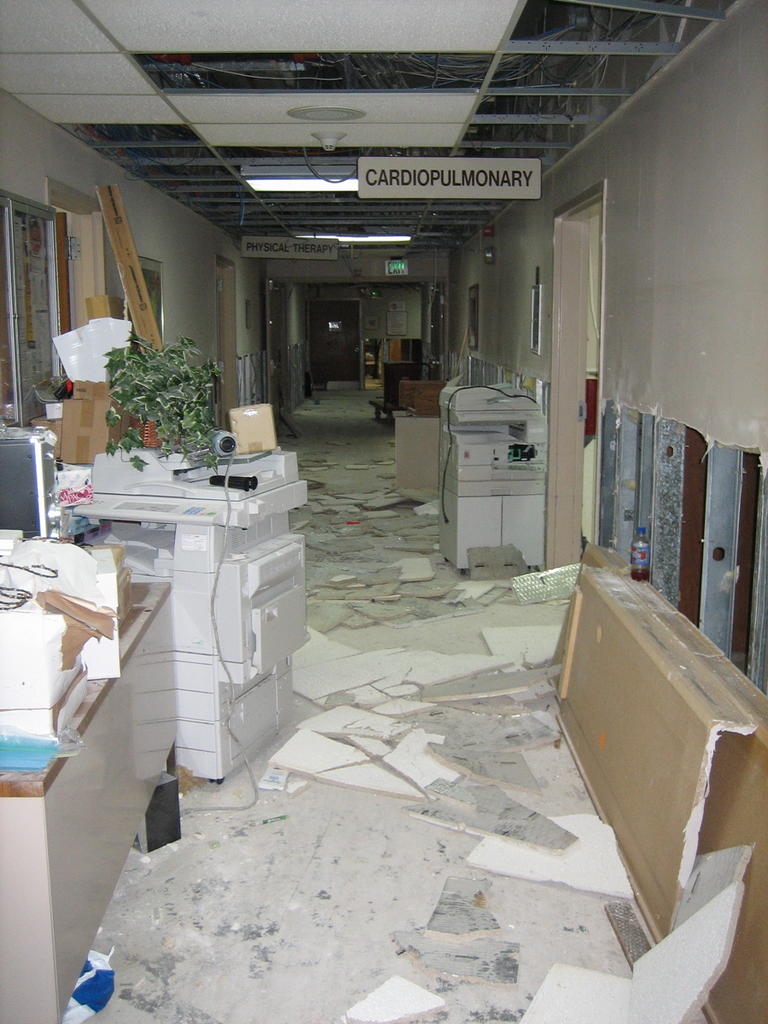 Here's the way the corridor looks now.
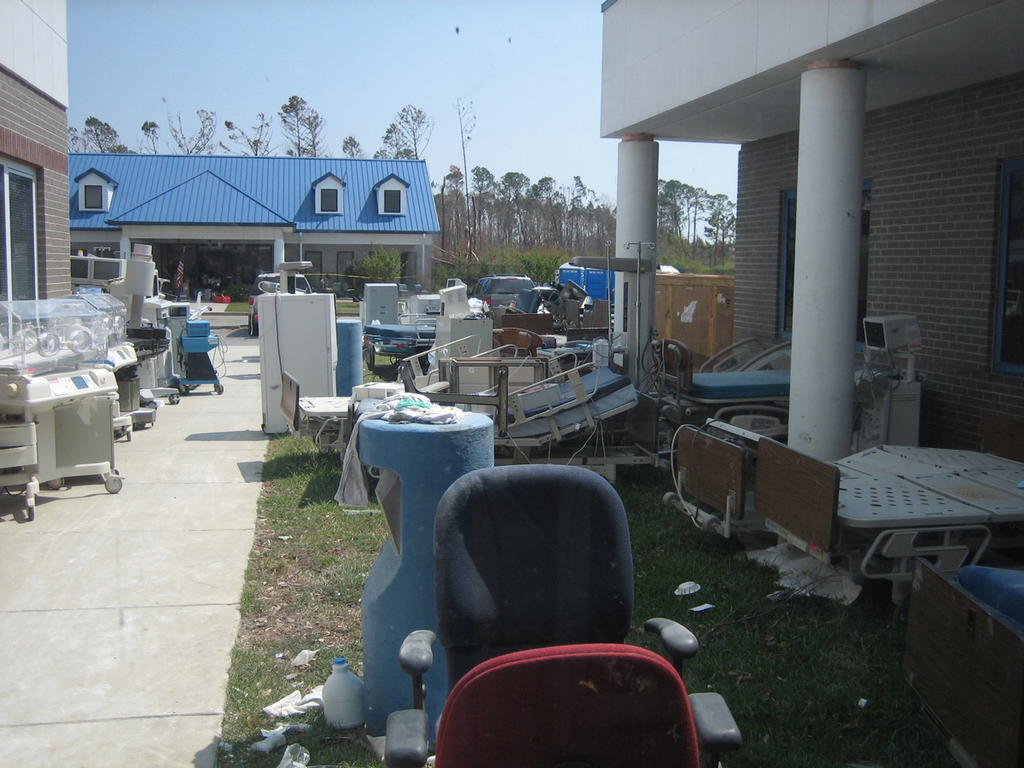
The medical equipment did not fare as well. The photo to the lower left shows a pile of it out in the patio, ruined.
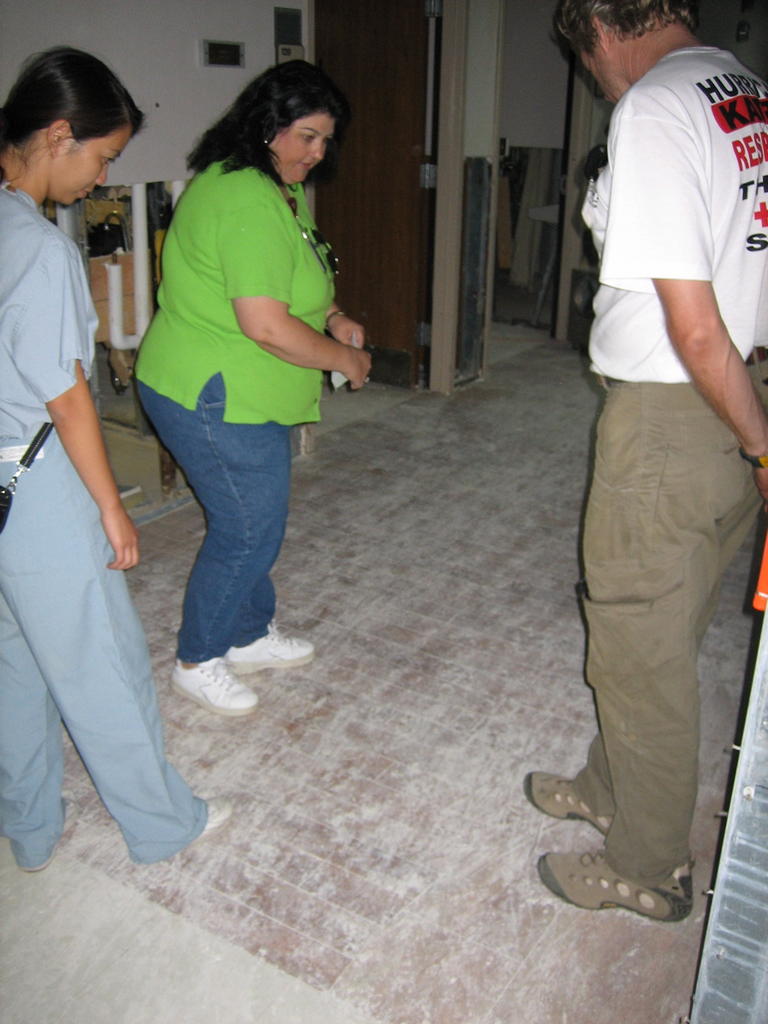
Angie shows us part of the floor where they were testing a new woodgrain vinyl tile. Other than the dirt tracked in, it is pristine. A great ad for the tile.
Back in front of the hospital (after the nurses shared their lunch with us), Angie told us that the containers are loaded with equipment and supplies to restock the hospital and their outlying clinics in Kiln and Waveland. Mobile homes will be used as facilities for the clinics. Angie gives us what seems like a wildly optimistic re-start date for the hospital of October.
 We leave Hancock humbled and awed by the spirit of the nurses despite their own terrible losses. The local physicians, by the way, all lost their office buildings. If the community wants them to stay, they'll clearly need some help rebuilding. I have no doubt the community is going to work together and rebuild it better than before.
We drove a few miles east on Pass Road to see a little of Bay St. Louis. Here is a photo of their Bay Bridge, with only the pylons standing, the deck entirely swept away. This must be a popular site to take pictures for us disaster tourists; there were four porta-pottis so no need to wait.
 Back down Pass Road, we find the hand-drawn sign that says “Field Hospital”. Frankly, we didn’t look when we came by before because the signage was so crude. It turns out that’s the only crude thing about an enormously impressive operation.
 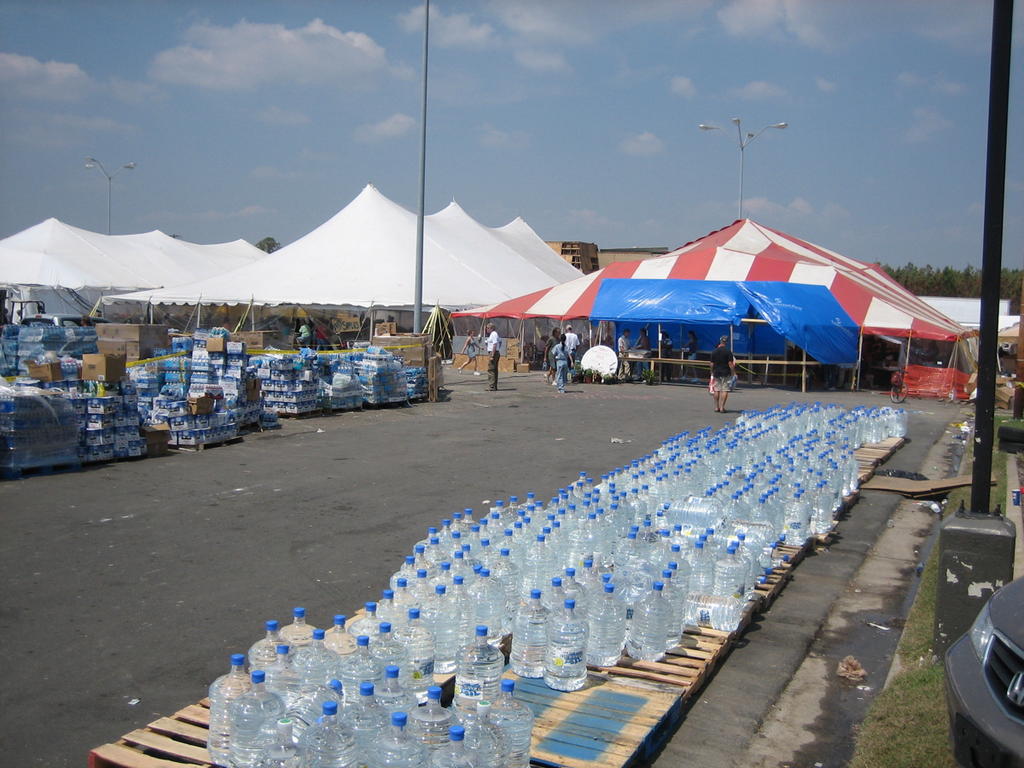 Here in the K-Mart parking lot (9 bodies were found on the K-Mart roof, such was the flood level here) is the world’s first complete mobile trailer-based hospital, Med-1 from North Carolina. Surrounding it is a Barnum and Bailey tent town of supplies, clothes (“I’d like something in blue,” whispers Kim)
 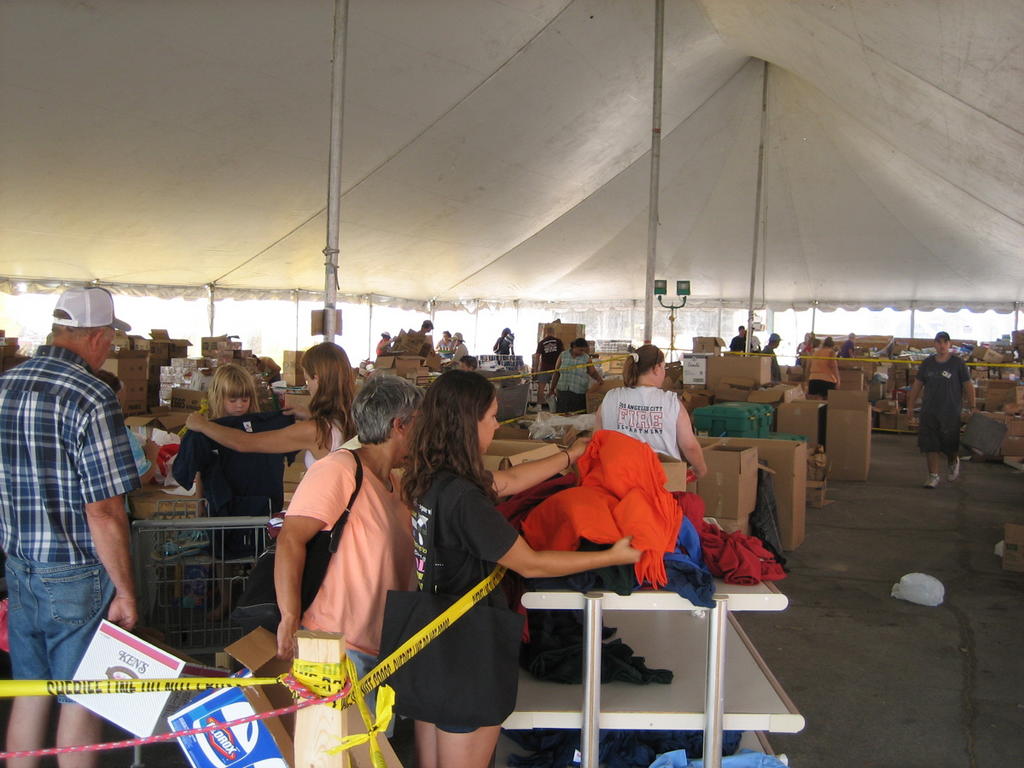 and representatives from FEMA and the Small Business Administration. An aid station is giving out tetanus shots; another tent is for triage.
We come to the Men in Black—a SWAT team from North Carolina intent on not letting any questionable characters into their priceless facility. Well, actually it’s not priceless, it cost FEMA $1.5 million, and it’s doubtful they’ve ever spent any money as wisely. After a radio call, we are met by the public affairs officer, Alan Taylor, who gives us the official tour. The mobile rig—a trailer much like a NASCAR support trailer—has side wings that triple its size when expanded. It is accompanied by a support trailer—a two-level job, again modeled after NASCAR—that carries the equipment and supplies when Med-1 is on the road.
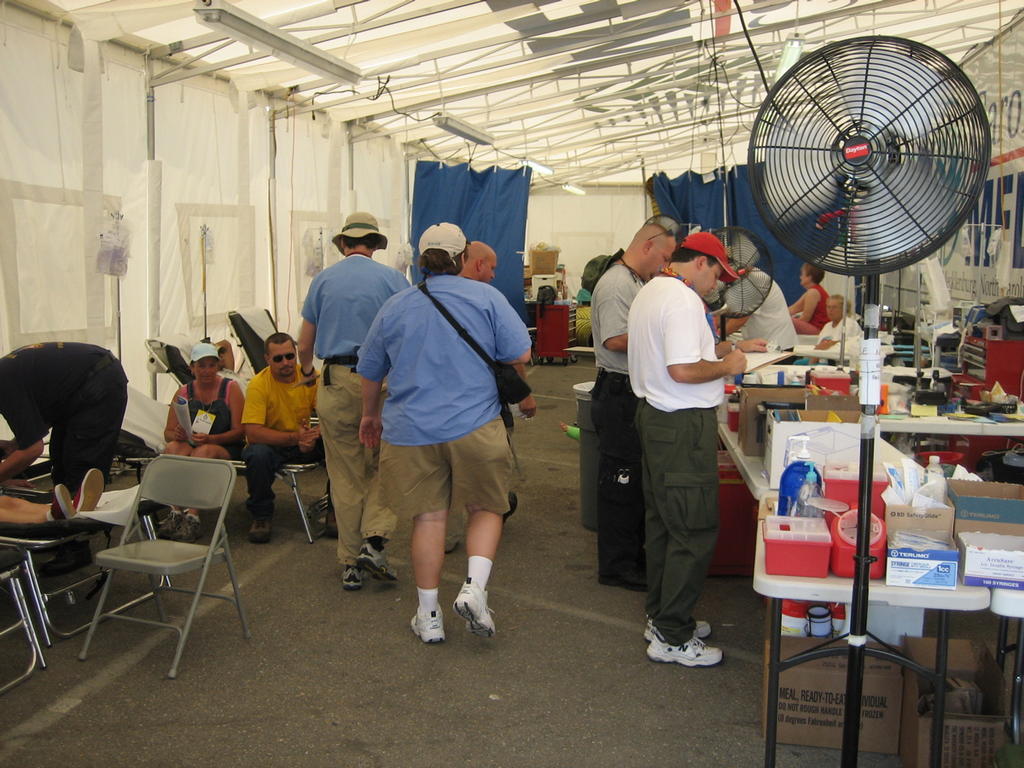 Surrounding us is a circus-sized tent, air-conditioned, with power supplied by the generator in the tractor that pulls the hospital. On one side, the urgent care area (photo on the right); on the other, an area that can serve as a ward for hospitalized patients.
 The hospital itself is completely self-contained: it has its own lab, ultrasound, digital radiography, a 4-bed CCU/ICU, an integrated medical information system, and a 1-bed OR.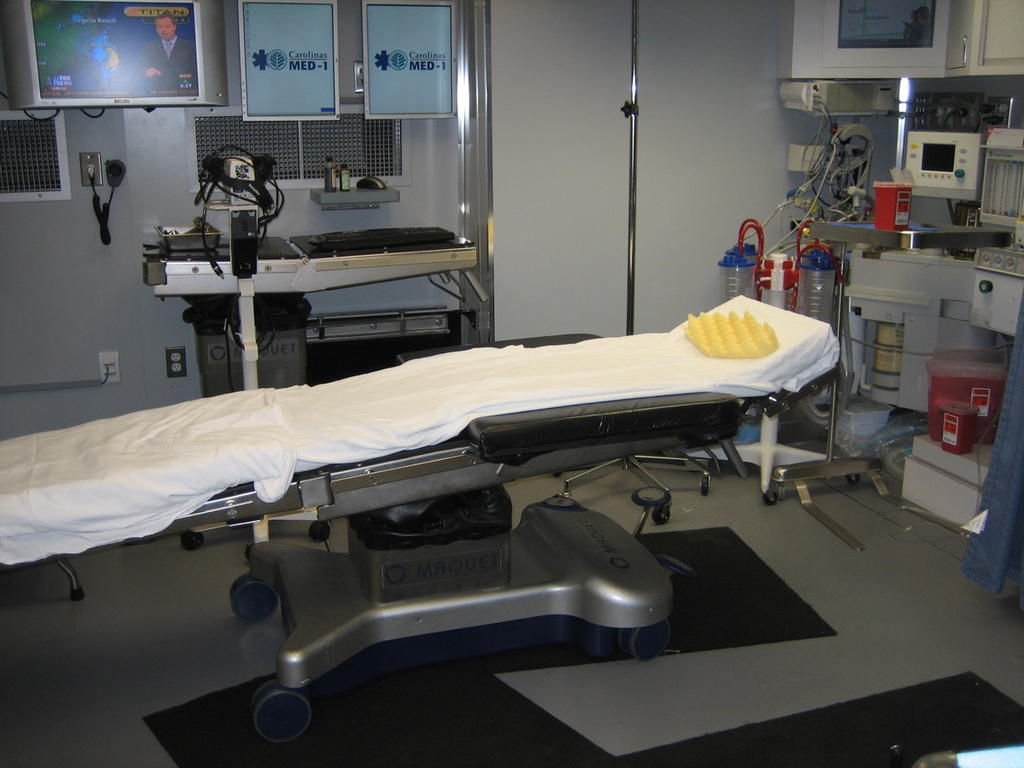

How did this marvel come to be? Dr. Tom Blackwell of Carolinas Medical Center had it already designed after prolonged research and analysis, when FEMA expressed an interest. According to Mr. Taylor, FEMA was expecting a very long process to acquire such capability, when Dr. Blackwell offered to fax the complete proposal. This during a conference call; and apparently Dr. Blackwell’s offer was met first with stunned silence, then with an astonished “What did you say?” Dr. Blackwell got his grant of $1.5 million from FEMA to build it. Mind you, we’d been told by one of our Humvee acquaintances that the support coach that accompanies them—a real luxury RV—would cost about a million on its own.
Speaking of luxury: here's the most recent modification of
 the system. Dr. Blackwell is a guy, so the support trailer has a big TV and a comfortable lounge. What he did not count on was the needs of the female nurses. Here's how they provided the needed equipment: yes, that is a vanity, complete with Hollywood lights for the mirror. Go, nurses!
I think FEMA got a great bargain. FEMA, the military, and some of the states such as Florida have looked at this prototype, so more may be built. Working with the military, the North Carolina folks were able to cut two inches off the dimensions, and that made the whole facility transportable by C-17 or C-5A. You like it? I may be able to get you a good deal on one. Have your governor call me.
This time, its first deployment, was a little more problematic. The Med-1 team was ready to go just after the storm; an agreement between the governor of North Carolina and Governor Blanco of Louisiana was prepared and faxed to Governor Blanco. 24 hours elapsed and the agreement was not signed. The team was ready to leave on Friday, September 2, and the agreement was not signed. The team was then federalized by FEMA and ordered to deploy. They made it as far as Mississippi—still no agreement. So instead of heading for Louisiana, Med-1 came to Bay St. Louis, where it serves as a temporary replacement for Hancock Memorial while the latter is out of commission. Although they have a mobile CT scanner as well (arranged by the Director of Hancock Memorial), Med-1 does not try to be a full-service hospital. They can do emergency surgery, but more sophisticated specialty surgery and large-scale hospital care is beyond their capability. What they can do is treat the more common things, stabilize critically-ill patients, and evacuate those they cannot handle. One can imagine that several of these rigs would be a Godsend to a devastated state in a natural disaster—provided the governor asks for it.
 Here is Myhanh in front of the New--and Improved--Waveland Cafe, where Christian Life feeds thousands every day. I don't know how many loaves and fishes they have left over, but they and other Chrsitian groups are doing a wonderful job of serving here. If you sent your donation to one of the Christian church denominations doing relief work, you did well. The Southern Baptist effort is particularly visible, but I've lost track of the names of the church-based or other Christian groups I've seen at work here. God has blessed you to be a blessing.
